DeepSeek reroutes models, Suno ships v6: Sept. 10
DeepSeek forces a model change, Suno starts its v6 migration, and Instinct gives AI agents an inbox. Here is what to rewire now.
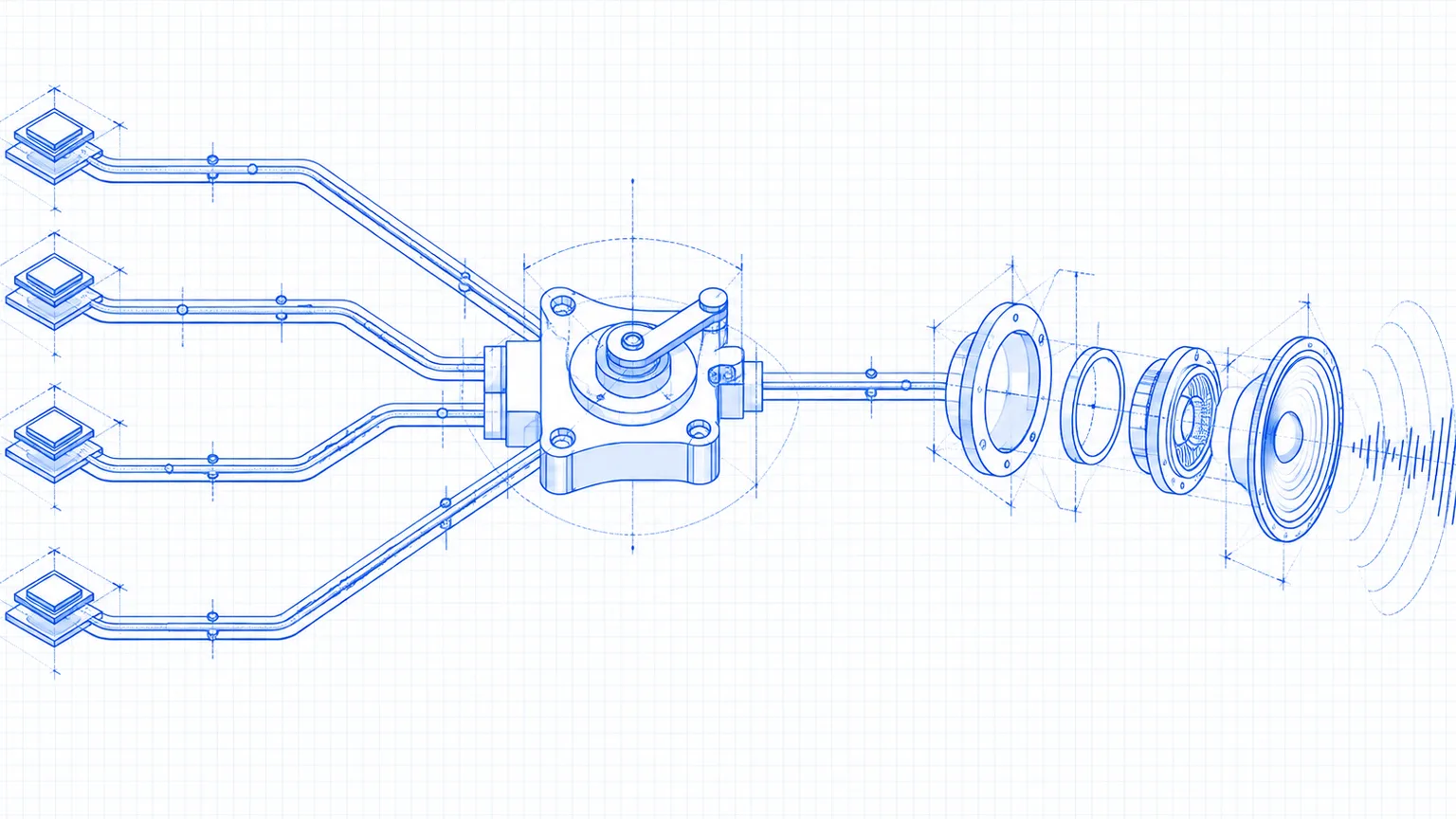
This sheet contains partner links. A purchase through one earns Runbook a commission at no additional cost to you. How we make money.
DeepSeek is about to redirect a live model, Suno is retiring its older music engines, and Instinct has given its AI assistant a separate inbox. Set aside 30 minutes. You’ll protect one automation from a surprise model swap, preserve approved campaign audio, and draw a safer boundary around email access.
DeepSeek reroutes V4 Pro to V4.1 Flash
DeepSeek will redirect every V4 Pro request to V4.1 Flash at 04:00 UTC on September 14. The company announced V4.1 Flash on September 10 and made it available through its API, the software connection another tool uses to request an AI answer. DeepSeek says the new model accepts images as well as text, while the older V4 Flash and experimental vision model are retired.
This is an operating change, not a model announcement you can leave for later. Any automation that names deepseek-v4-pro will soon receive answers from a different model and be billed at the Flash rate. DeepSeek also says off-peak processing costs half its peak price. That makes delayed jobs cheaper, but a lower bill does not prove that summaries, classifications, or customer replies will keep the same format.
Open the automation tool that calls DeepSeek and find the step labeled Model, Model ID, or Request body. Duplicate the workflow. In the copy, replace deepseek-v4-pro with deepseek-flash, then run 10 saved examples that contain no customer information. Compare the answer structure, missing facts, processing time, and cost. The test pattern in the weekly reporting runbook works well because its source figures do not move during the comparison.
Your move
deepseek-v4-pro today. Test the same 10 saved inputs through deepseek-flash, fix any changed fields, and approve the copy before DeepSeek performs the redirect on September 14.Suno starts moving music work to v6
Suno released three v6 music models on September 9 and said its earlier models will be retired as the new generation rolls out. The official v6 announcement names v6 for controlled production, v6-wild for wider variation, and v6-mini for faster generation. It also adds plain-language editing of one song section, single-lyric changes, and creation from text, audio, images, or video.
The useful business change is revision cost. If one word in a campaign track is wrong, you can ask to replace that line instead of rebuilding the whole song and rechecking every edit point. But retirement creates a reproducibility problem: an old prompt may not recreate the approved result after its model disappears.
Export the final audio and save the prompt, model name, project link, creation date, reviewer, and permitted channels beside it. Then duplicate one current project in v6. Change only the flawed section and listen to the full export, including the joins on both sides. Put it through the AI content approval workflow, especially if you uploaded a voice memo or other source recording.
Teams with active campaign music should archive now. Everyone else can wait until a real brief needs audio rather than generating a library of unapproved tracks. The voice and video runbooks provide the next build once ownership and review are recorded.
Instinct gives its agent a separate inbox
Instinct added an individual email address for its AI assistant on September 8. Founder Noah Shinn’s launch post says the assistant can send and receive messages, create accounts, confirm bookings, contact businesses, and follow up. An AI agent is software that completes several steps toward a goal instead of returning one answer.
A separate inbox can reduce a major permission problem. You can forward one order confirmation or add the agent to one thread without opening the company’s entire mailbox. The risk moves, though. An inbox that can reset passwords and create accounts can become a doorway into other services.
Treat the address as a junior operator, not a shared company identity. Forward one low-risk thread with fake or replaceable information. Do not connect payments, customer records, the main domain administrator, or password recovery. Keep every outbound message subject to review until the activity record proves understandable. The same permission discipline appears in the AI tool access checklist.
This is for a narrow administrative test. It is not ready to own customer support or purchasing simply because it has an address.
On the bench
- DeepSeek’s downloadable V4.1 Flash files are worth watching for private installations, but only after the hosted version passes the saved-input test.
- Suno’s v6-wild belongs in idea generation, not final campaign production, because the company describes it as deliberately less predictable.
- Instinct’s forward-one-thread method deserves a permissions test before anyone considers connecting a complete mailbox.
Get the next build from the automation library.
About Runbook
AI tools and automation builds for marketers. What to use, how to wire it, and the workflow to copy this week. How we work
GET THE NEXT DISPATCH
Run the next build before your competitors read about it.
One short email when an AI tool or automation actually changes the work, with the build to copy.
No send unless there is a build worth running.
// keep_reading
Related builds
Claude adds Projects, Bonsai shrinks AI: Sept. 18
Claude coordinates parallel AI work, Bonsai 2 runs locally, and Google opens UN data to AI. Here are the stack changes to make today.
Gemini 3.8 Live and Meta One: Sept. 16 dispatch
Gemini 3.8 Live upgrades voice agents, while Meta One puts business AI behind new plans. Here are today's four stack changes and wiring moves.
ChatGPT Data lands, Slack builds dashboards: Sept. 11
ChatGPT Data connects business records, Slack builds channel dashboards, and Gemini reaches Windows. Here is what to wire and test today.